When I tell a patient they need a root canal, every so often someone asks, carefully: “I read online that root canals can cause heart disease or dementia… is it really okay to have one?” When you’re already dealing with pain, hearing something like that naturally leaves you unsettled. So today I want to calmly walk through where that idea came from, and what we actually understand now.
The story goes back nearly a century. In the 1920s, a dentist proposed that bacteria inside a tooth could spread through the body and cause various illnesses. Infection wasn’t understood the way it is today, and for a time this belief led people to pull teeth that could have been saved. But research over the following decades showed the theory had no real foundation, and it was largely settled by the 1930s–50s. A documentary a few years ago revived the old story and caused some confusion, but it was really bringing back a misunderstanding that had been put to rest long ago.
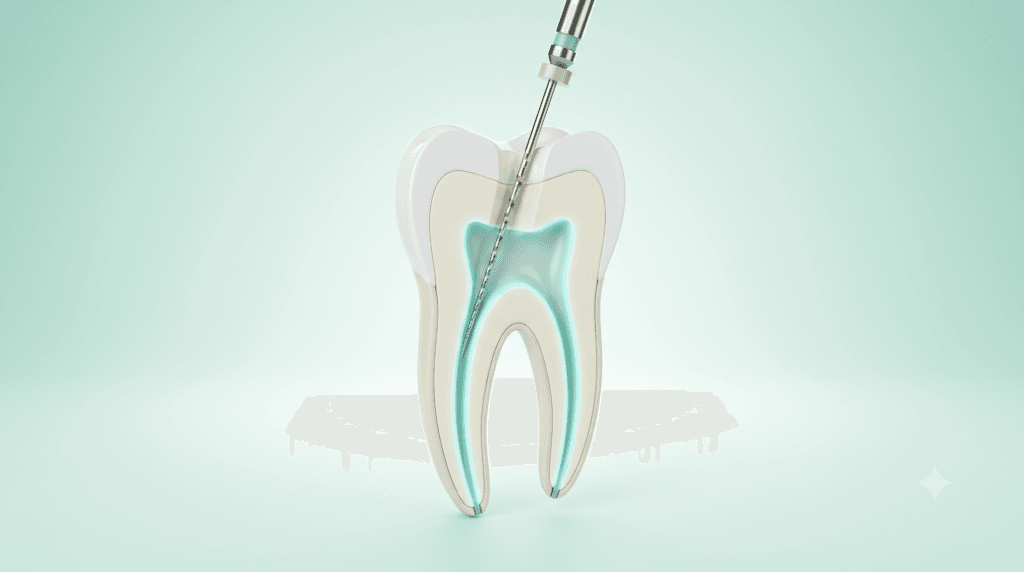
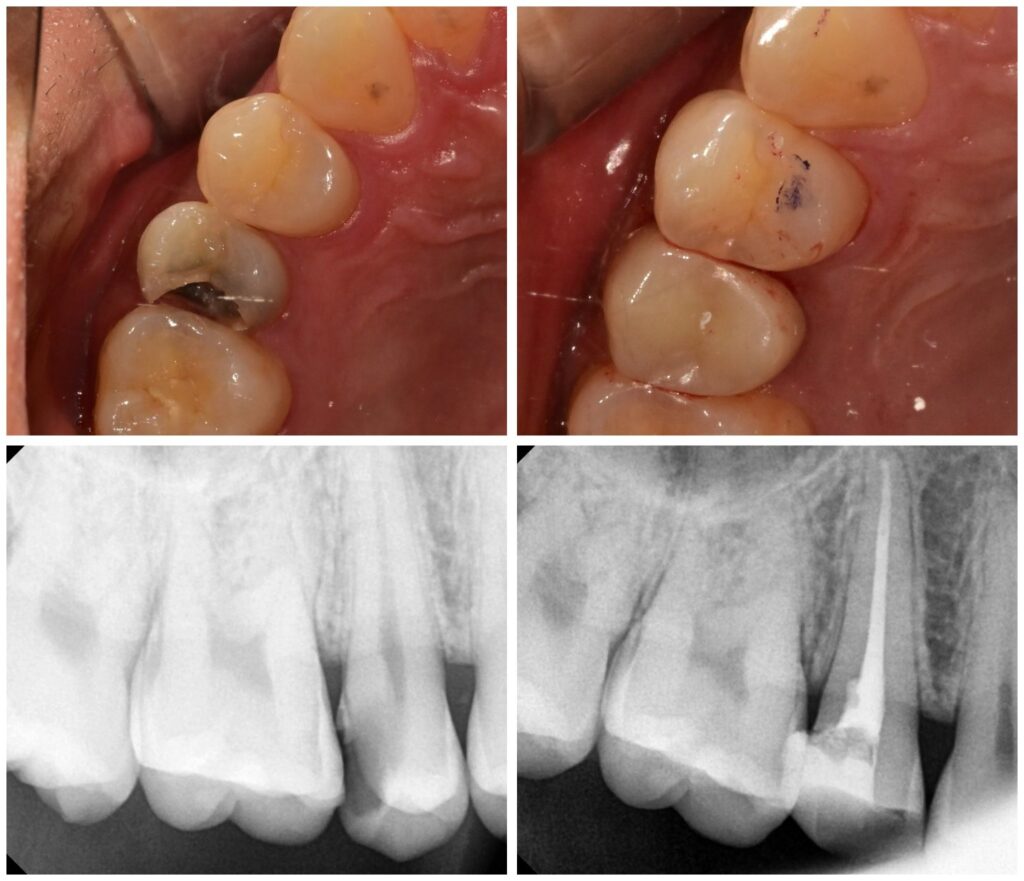
If anything, the truth runs the other way. What actually deserves attention isn’t the root canal itself, but an infection left untreated inside a tooth for a long time. When inflammation at the root tip doesn’t settle, it doesn’t necessarily stay in the mouth — it can affect the rest of the body. A root canal is the process of clearing out that hidden inflammation, not something that creates illness.
Recent research points the same way. In 2025, a team at King’s College London followed patients for two years after root canal treatment, and more than half showed improvements in blood sugar, cholesterol, and inflammation levels. Another study that year found a noticeable drop in a key inflammation marker one year after treatment. The studies mentioned alongside dementia are mostly about the risks of untreated gum disease — which again leads to the same conclusion: tending to infection in the mouth in good time is good for the whole body.
There’s one honest thing I’d add. A root canal matters most when it’s seen through to the end. If you stop partway because the pain is gone, the infection left inside can become a problem later. Finishing the treatment you’ve started, all the way to the final step — that’s the simplest and surest path.
Over many years of practice, the moments that have saddened me most were never problems caused by treatment, but the times a vague fear led someone to put off care until it grew worse. Most of that fear comes from inaccurate information. If reading this has lightened that fear even a little — enough that you feel like taking another look at the tooth you’ve been putting off — then it has done its job.
Sources
The old claim debunked :
American Association of Endodontists (AAE), “The Focal Infection Theory”
UCSF School of Dentistry, “The Root Cause of Misinformation” (2019)
Recent research showing root canals lower risk :
Niazi et al., Journal of Translational Medicine (2025), King’s College London
Bhardwaj et al., Cureus (2025), DOI: 10.7759/cureus.87723
Dental infection and systemic disease :
Periodontitis–dementia meta-analysis, Journal of Evidence-Based Dental Practice (PMID 40335202)
Taiwan cohort study on chronic periodontitis and Alzheimer’s risk (PMC5547465)