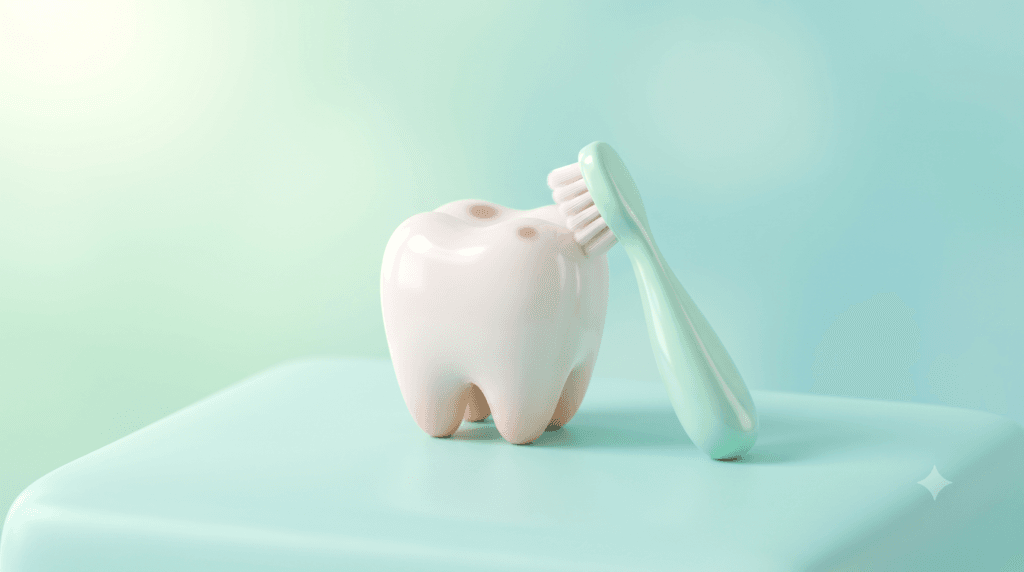
Cavities in Baby Teeth: "They'll Fall Out Anyway — Do We Really Need to Treat Them?"
Dr’s Notes
This is the question I hear most often from parents in pediatric consultations — and honestly, it’s the most reasonable one. The tooth will fall out in a few years and a new one will replace it, so is it worth putting a child through a difficult treatment? I understand this usually isn’t about cost; it’s about the fear and hardship the child will go through.
The answer is: most of the time yes, but not always. The purpose of this post is to explain where that line sits.
What a "temporary" tooth actually does
Baby teeth are not mere placeholders waiting for adult teeth. They have specific jobs, and decay dismantles those jobs one by one.
Holding the space. The most important mission of a baby molar is reserving the spot where the permanent tooth will erupt. When decay causes a baby tooth to be lost early — or collapses its side walls — the tooth behind it tips into the gap. Years later, the permanent tooth finds no room and erupts crooked, and this is one of the most common roads to orthodontic treatment. One decayed baby molar can quietly become a future orthodontics bill.
Being the upstairs neighbor of a developing adult tooth. Directly beneath a baby tooth’s roots sits the developing permanent tooth bud. If decay reaches the baby tooth’s nerve and infection forms at the root tips, that infection can affect the bud below. Some permanent teeth that erupt with weak white or brown patches on their surface carry exactly this history. A disease of the “disposable” tooth leaving a permanent mark on the “lifetime” tooth.
Chewing, nutrition, speech, and confidence. Children don’t chew on a tooth that hurts. Instead of saying so, they chew on one side only, or quietly start avoiding foods that need chewing. Growth-stage nutrition and eating habits, speech when front teeth are damaged, even shyness around peers — it often doesn’t stay a one-tooth problem.
And pain arrives without warning. Baby teeth have thinner enamel than adult teeth, so decay travels faster. The “tiny dark spot” reaches the nerve within months, and one night the cheek swells and you’re at a clinic on an emergency basis. Treatment under those circumstances is many times harder on a child than planned treatment ever would have been.
When watchful waiting is legitimate
Not every cavity needs immediate drilling. Early, arrested lesions confined to the enamel can be monitored with fluoride applications and hygiene management. And a baby tooth that is genuinely about to fall out — already mobile, its roots nearly resorbed on the X-ray — may reasonably be left to exfoliate on its own rather than treated.
Treatment itself also isn’t limited to “numb and drill.” There are decay-arresting agents (such as silver diamine fluoride), minimal-removal approaches, and options matched to the child’s stage of cooperation and the lesion’s depth. The key point: between neglect and treatment there is a middle path called managed monitoring — and it is only safe when regular checkups actually happen.
Three questions that decide it
Whether to treat comes down to three things: how long until this tooth falls out naturally (a tooth with six months left and one with four years left are completely different cases), how deep the decay has traveled, and what secondary problems follow if this tooth collapses — space loss, effects on the permanent tooth. If your consultation gives you answers to those three, you’ll understand the reasoning behind either recommendation, “treat it” or “watch it.”
Frequently asked questions
Root canal treatment on a baby tooth — isn’t that excessive? If decay has reached the nerve but the tooth still has years of service left, pulpal treatment on a baby tooth isn’t excessive — it’s the standard way to keep the space-holder alive. Conversely, if the tooth is about to exfoliate, extraction may be the answer. Remaining lifespan is the deciding factor.
What if a baby tooth was already lost early? A space maintainer is considered so the gap doesn’t narrow. One simple appliance often reduces the scope of future orthodontic treatment considerably.
My child is terrified of the dentist. For a child not yet able to cooperate, treatment can be broken into small, graduated steps — or decay-arresting agents can buy time until the child is ready. Not creating a frightening memory is itself an asset for lifelong oral health, and it deserves a place in the treatment plan.
This article is for general information; individual diagnosis and treatment planning require an in-person examination.