Why a Root-Canal-Treated Tooth Can Still Hurt — When Retreatment or an Apicoectomy Is the Answer
Dr’s Notes
“The nerve is gone — why does it hurt?” That’s the first question from nearly every patient who returns with pain in a tooth that already had root canal treatment. It feels contradictory, and the confusion is understandable. But clinically it’s not rare, the causes can usually be identified — and most importantly, many of these teeth can still be saved rather than extracted.
Why a treated tooth hurts again
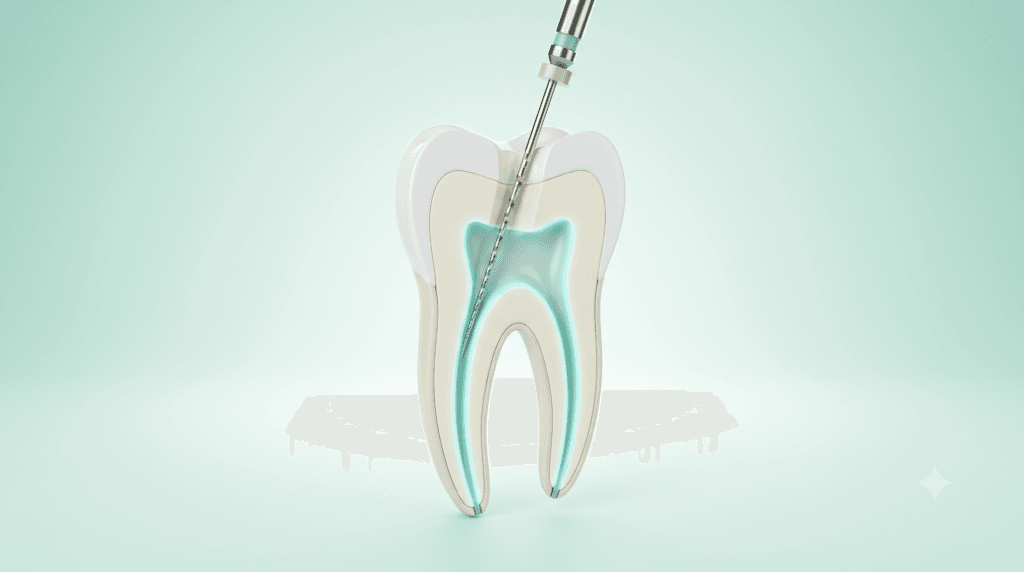
The goal of root canal treatment is to remove infected nerve tissue from inside the tooth and seal the empty space. The complication is that the inside of a tooth rarely looks like the textbook diagram.
Missed canals. A molar typically has three or four canals, but extra or hidden canals (such as the notorious MB2) are common. If even one goes untreated, infection remains inside it.
Complex canal anatomy. Severely curved, calcified (narrowed), or laterally branching canals can prevent instruments from reaching the full length.
Reinfection. Even a well-done treatment can fail if bacteria leak back in through a gap under the crown, or if the tooth sits too long with only a temporary filling.
A cracked root. Unfortunately, this is the classic cause that retreatment cannot fix. It’s also difficult to diagnose, requiring CBCT findings and clinical signs to be read together.
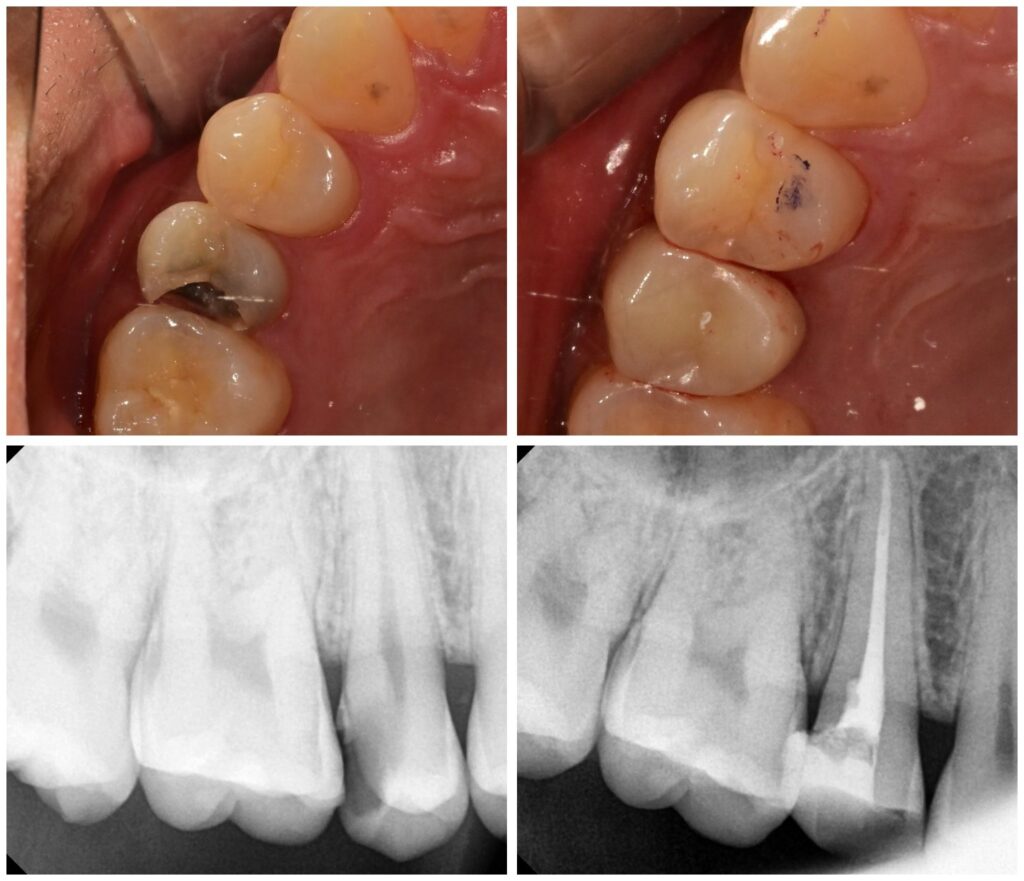
Throbbing for a few days right after treatment can be normal healing. The red flags are pain on biting that persists for weeks or months, a pimple-like bump on the gum (a sinus tract), or a dark lesion at the root tip that grows on X-rays.
First option: root canal retreatment
If the cause is inside the tooth — a missed canal, incomplete filling, reinfection — the principled first choice is retreatment: removing the existing filling material and starting over. It’s more demanding than the original treatment, because the old material must come out and any ledges or blockages created previously must be negotiated. That’s why magnification (loupes or a microscope) and three-dimensional cause-finding with CBCT make a real difference in outcome quality.
Second option: apicoectomy (root-end surgery)
Sometimes retreatment can’t reach the problem: the canal is completely calcified, the lesion is confined to the root tip, or a deep post inside the tooth would make disassembly riskier than it’s worth — tearing off a good crown and post can jeopardize the tooth itself.
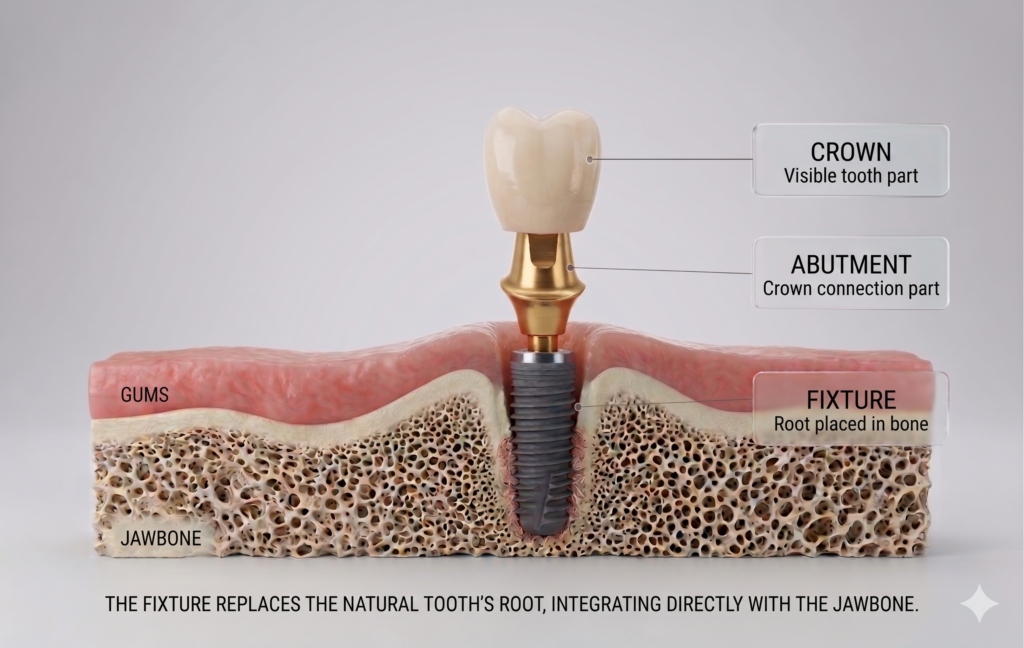
In those cases we approach from the gum side. The gum is opened, roughly the last 3 mm of the root tip and the surrounding lesion are removed directly, and the cut root surface is sealed from the reverse direction. That’s an apicoectomy. The word “surgery” worries people, but it’s done under local anesthesia — and it functions as the last line of defense for keeping a natural tooth before the next step becomes extraction and an implant. In some cases, retreatment and apicoectomy are used in sequence when a lesion persists.
When extraction is the honest answer
A vertical root fracture, extensive bone loss around the tooth, or too little remaining tooth structure to support a crown — in these situations, repeating heroic treatment wastes time and money. Honest dentistry means not giving up on a savable tooth, and equally, not selling futile treatment for an unsavable one. The dentist should be able to show you the basis for that judgment — the X-rays, the CBCT findings, the clinical tests — not just announce a verdict.
Frequently asked questions
Does pain in a root-canal-treated tooth always mean retreatment? No. Temporary pain right after treatment can be part of healing, and pain from a high bite can resolve with a simple adjustment. Pain lasting weeks, a gum bump, or a growing lesion are the signals that retreatment should be evaluated.
What’s the success rate of retreatment? It depends on the cause and the tooth’s condition, but when the cause is clearly identified and accessible, retreatment is quite predictable. The key isn’t the percentage — it’s establishing why the first treatment failed. Without that answer, a retreatment fails for the same reason.
Does an apicoectomy shorten the tooth’s lifespan? A small portion of root tip is removed, but the tooth is far more stable than one carrying an active lesion. Once healed, it can function as a natural tooth for many years.
This article is for general information; individual diagnosis and treatment planning require an in-person examination.