Why Implant Bone Graft Quotes Differ So Much Between Clinics — What's Actually Inside That Line Item
Dr’s Notes
Patients who shop around for implant consultations almost always come back with the same question: “One clinic quoted a price including the bone graft, another quoted double — what’s the difference?” Many also ask why the advertised price and the actual estimate don’t match.
Some price differences have legitimate reasons. Some don’t. This post unpacks what’s actually inside the line item called “bone graft” so you can tell the two apart.
Why bone grafting is needed in the first place
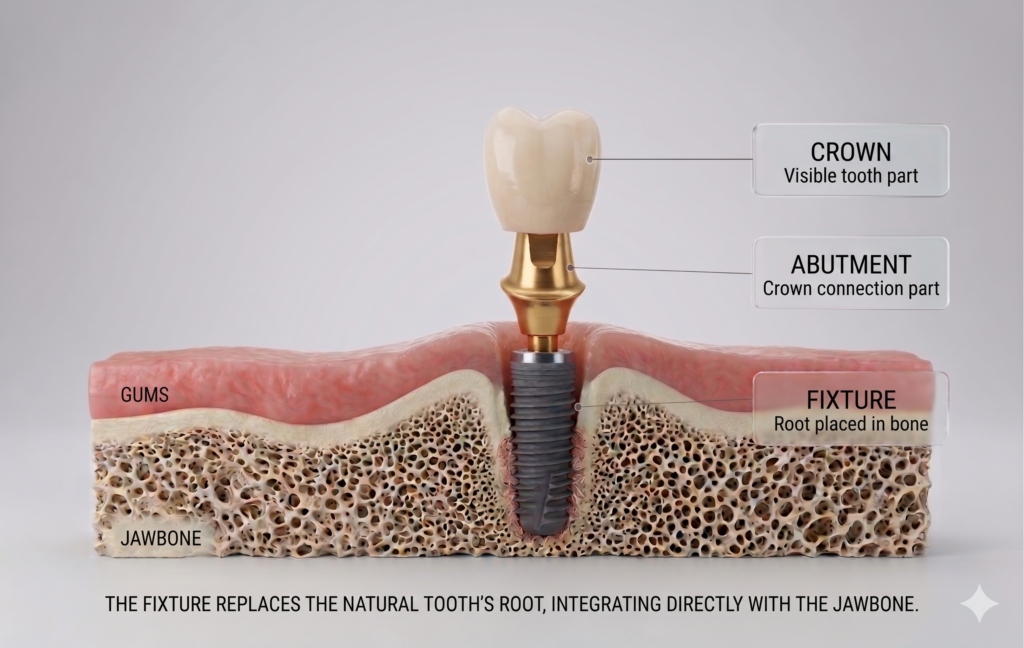
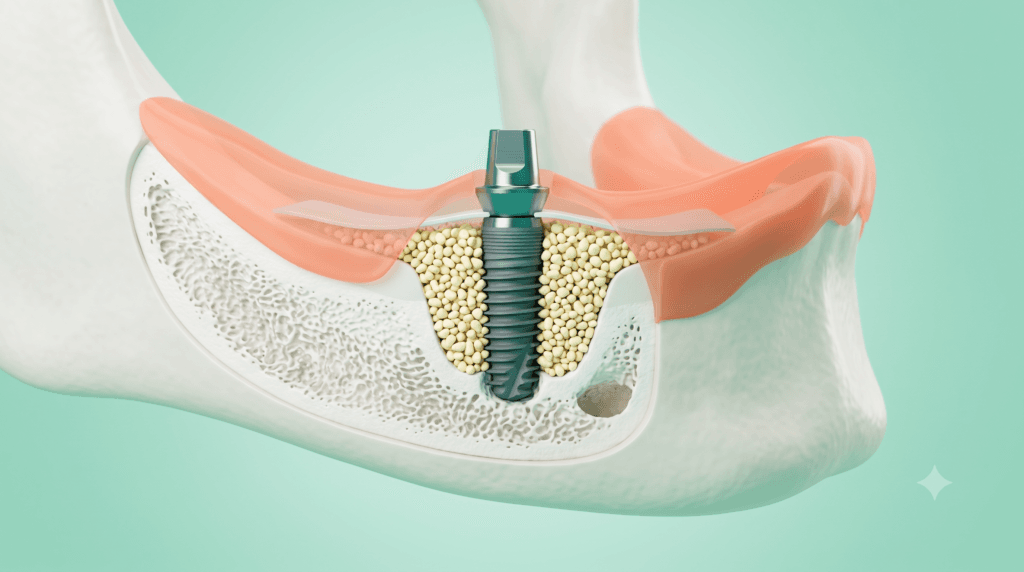
An implant is a screw placed in bone. If the bone lacks the width or height to support that screw, the implant can’t be placed — or won’t last if it is. The complication is that jawbone shrinks over time once a tooth is gone. A site left empty for years after extraction, bone melted away by gum disease, or an upper molar area where the maxillary sinus (an air space) leaves naturally shallow bone — these sites need bone rebuilt before an implant can succeed. That rebuilding is bone grafting.
In other words, a bone graft is not an optional add-on product. Anatomy decides who needs it and who doesn’t — and how much and by what technique differs completely from person to person, which is exactly why estimates differ.
Legitimate reasons quotes vary
The graft material. Graft materials fall into four families: autogenous (your own bone), allograft (processed donated human bone), xenograft (mostly bovine-derived), and synthetic. Each has different healing characteristics and different unit costs, and in real practice they’re often combined depending on the site and purpose. Material choice and quantity alone can shift costs several-fold.
Membranes and fixation. For grafted particles to mature into solid bone, a barrier membrane is often needed to keep gum tissue from invading the site first. Resorbable versus non-resorbable membranes, titanium mesh, fixation pins — each addition is a real cost.
Scope and difficulty of the procedure. Adding a small amount of graft around an implant at placement, rebuilding ridge width with guided bone regeneration (GBR), and lifting the sinus floor for an upper molar (which itself differs between a lateral-window and a crestal approach) are procedures of entirely different magnitude. If the estimate just says “bone graft” in two words, ask which of these it assumes.
Whether stages are separated. Poor bone may require grafting first, months of healing, and implant placement as a second stage. Visit count, healing time, and cost all change.
And the differences that aren't legitimate
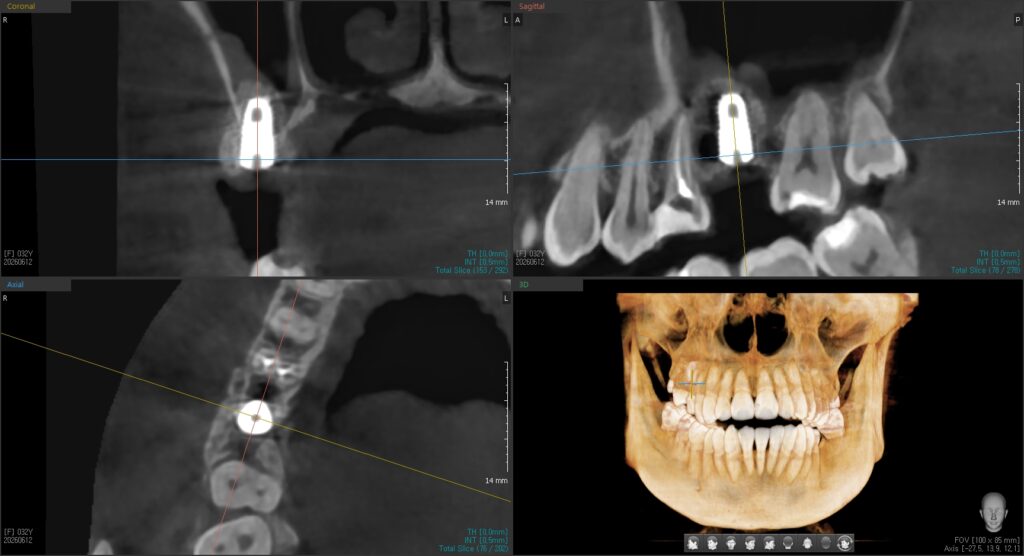
Be cautious of these patterns: an advertised implant price where the graft, sinus lift, and CT scan are all separate add-ons that multiply the final bill; a flat package price quoted without any three-dimensional evaluation (CBCT) of your bone; or the reverse — grafting bundled in habitually even when bone is clearly sufficient.
A reasonable estimate isn’t the cheapest one — it’s the one whose reasoning is visible. How many millimeters of width and height your CBCT shows, therefore which technique with which material is needed and why, and how the cost breaks down by item. If your treatment plan explains that, you can meaningfully compare it against another clinic’s — whether the number is higher or lower. Estimates that show only a total, with no reasoning, can’t really be compared at all.
Frequently asked questions
Does a bone graft make an implant last longer? It’s less that the graft itself extends lifespan, and more that an implant placed in adequate bone lasts. Grafting where needed and placing properly beats forcing an implant into insufficient bone every time, long-term.
Is bone grafting painful? It depends on scope, but it’s done under local anesthesia, and small-volume grafts feel much like implant placement itself. Sinus lifts and extensive GBR involve more swelling and longer recovery.
Is bovine-derived graft material safe? Properly licensed xenografts are deproteinized mineral scaffolds with decades of worldwide clinical use behind them. That said, material selection depends on the site, the goal, and patient factors — so it’s worth hearing which material is being used and why.
This article is for general information; individual diagnosis and treatment planning require an in-person examination.